

Stamped concrete has become one of the most popular choices for enhancing outdoor spaces. From elegant patios to durable driveways, this versatile material delivers both beauty and strength. Understanding how stamped concrete works can help you make confident decisions when planning your next construction or renovation project.
At BHC Construction, quality craftsmanship and long-lasting results remain top priorities. In this guide, we’ll walk you through the complete stamped concrete process, its benefits, and why it continues to be a smart investment for residential and commercial properties.
Understanding the Basics of How Stamped Concrete Works
Before diving into the process, it’s important to understand what stamped concrete actually is. Stamped concrete is freshly poured concrete that receives texture, patterns, and color while still wet. These elements replicate materials such as brick, stone, slate, or wood.
Unlike traditional paving materials, stamped concrete creates a seamless surface. As a result, it reduces maintenance needs and improves durability. This combination makes it ideal for patios, walkways, pool decks, and driveways.
How Stamped Concrete Works from Start to Finish
Site Preparation and Base Installation
Every successful project begins with proper preparation. Contractors first evaluate the area, remove debris, and ensure proper drainage. Then, they compact a stable base layer to prevent future shifting or cracking.
This foundation supports the concrete slab and ensures long-term performance. Without this step, even the most attractive stamped surface may develop problems over time.
Pouring and Leveling the Concrete
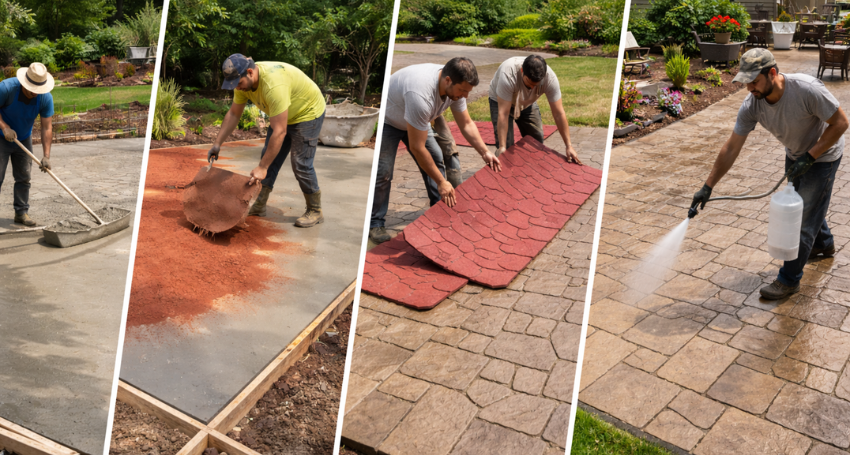
Once the base is ready, fresh concrete is poured evenly across the surface. Professionals use specialized tools to spread and level the material. At this stage, consistency is crucial.
A smooth, even slab creates the perfect canvas for stamping and coloring. Skilled crews also monitor weather conditions to ensure ideal curing conditions.
Adding Color and Decorative Enhancements
Color plays a major role in how stamped concrete works visually. Contractors apply integral pigments or surface color hardeners to achieve the desired shade. These colors mimic natural stone, tile, or brick.
Additionally, accent colors may be added to create depth and realism. This step transforms plain concrete into a visually appealing surface.
Stamping the Pattern
While the concrete remains workable, professionals press textured mats into the surface. These mats contain detailed patterns that transfer onto the concrete.
Timing is critical here. If stamping happens too early or too late, the pattern may distort. Experienced contractors know exactly when to begin this process for flawless results.
Sealing and Final Curing
After stamping and curing, a high-quality sealant is applied. This sealant protects the surface from moisture, stains, UV damage, and wear.
Moreover, sealing enhances color vibrancy and adds a subtle shine. Regular resealing every few years keeps stamped concrete looking new.
Why Homeowners Choose Stamped Concrete Surfaces
Stamped concrete offers several advantages over traditional paving materials. First, it delivers the look of premium materials at a more affordable price. Second, it requires less maintenance than pavers or natural stone.
In addition, stamped concrete resists weeds, shifting, and settling. This stability makes it especially appealing for long-term outdoor projects.
How Stamped Concrete Works for Commercial Properties
Durability and Heavy-Traffic Performance
For businesses, durability matters. Stamped concrete handles heavy foot traffic, vehicles, and equipment without compromising appearance. When properly installed, it withstands years of use.
Professional Appearance and Branding
A well-designed stamped surface improves curb appeal. Whether for storefronts, offices, or commercial plazas, decorative concrete enhances brand image and customer perception.
Maintenance Tips for Long-Lasting Results
Although stamped concrete requires minimal upkeep, routine care extends its lifespan. Regular sweeping and occasional washing remove dirt and debris. Additionally, resealing every two to three years preserves color and strength.
Promptly addressing small cracks or surface wear prevents larger repairs later. With proper maintenance, stamped concrete remains attractive for decades.
Choosing the Right Contractor for Stamped Concrete Projects
Selecting a qualified contractor plays a major role in project success. Look for companies with proven experience, strong portfolios, and positive reviews.
Professional installers understand how stamped concrete works in different environments and soil conditions. They also follow best practices for curing, sealing, and finishing.
The Long-Term Value of Decorative Concrete
Understanding how stamped concrete works empowers you to invest wisely. This innovative solution blends aesthetics, durability, and cost-efficiency into one seamless package.
Whether you’re enhancing a backyard patio or upgrading a commercial entrance, stamped concrete delivers reliable performance and timeless appeal. With expert installation and proper maintenance, your surface will continue to impress for years to come.
Conclusion
If you’re considering upgrading your outdoor space, partnering with an experienced team makes all the difference. At BHC Construction, we specialize in high-quality stamped concrete solutions tailored to your needs.
From initial consultation to final sealing, our experts focus on precision and durability. Contact us today to discuss your project, request a quote, and discover how stamped concrete can elevate your property’s value and appearance.