
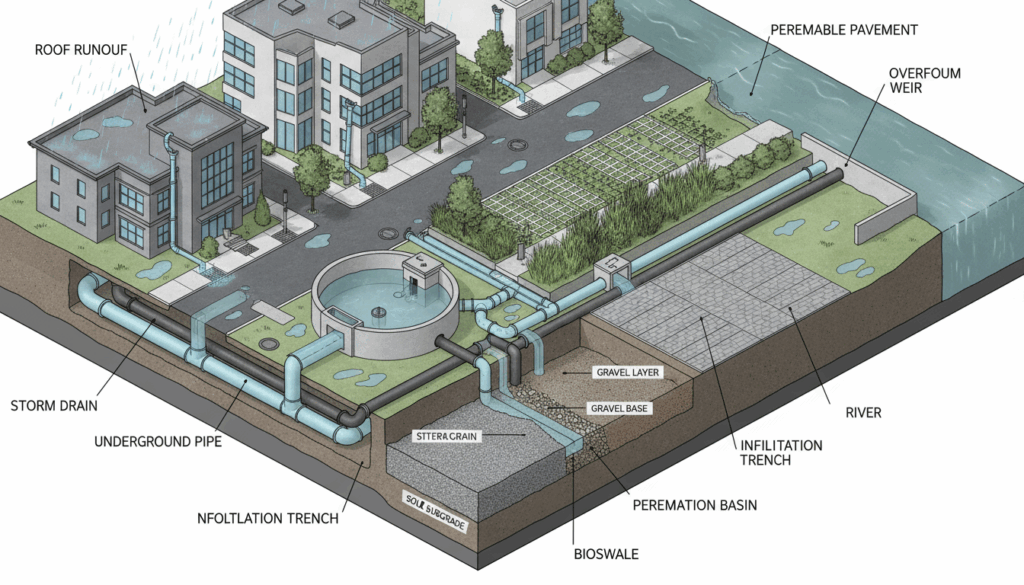
Site drainage planning and stormwater management are critical elements of modern construction, land development, and infrastructure projects. Whether you are developing a residential property, commercial site, roadway, or industrial facility, managing water correctly can mean the difference between a durable, safe site and one plagued by flooding, erosion, and structural damage.
Stormwater runoff occurs naturally when rainfall or snowmelt flows over land surfaces. However, poor site drainage design, increased impervious surfaces, and inadequate planning can overwhelm natural systems, leading to property damage, environmental pollution, and costly repairs.
This guide provides a complete, easy-to-understand explanation of site drainage planning and stormwater management, covering systems, techniques, regulations, costs, and best practices. It is designed for property owners, developers, engineers, and contractors seeking accurate, practical, and valuable information.
What Is Site Drainage Planning?
Site drainage planning is the process of designing systems that safely collect, control, and discharge surface and subsurface water away from buildings, roads, and developed land. The primary goal is to prevent water accumulation while protecting structures, soil stability, and nearby water bodies.
Effective site drainage planning integrates:
- Site grading and slope design
- Surface water control systems
- Subsurface drainage solutions
- Safe discharge points
Drainage planning is not a standalone task; it is closely linked with overall site design, civil engineering, and land development strategies.
Understanding Stormwater Management
Stormwater management focuses on controlling runoff generated by rainfall or snowmelt before it causes flooding, erosion, or pollution. Unlike groundwater, stormwater flows across surfaces such as roads, rooftops, and parking areas.
Urban development significantly increases stormwater runoff due to impervious surfaces that prevent infiltration. Without proper management, runoff can overwhelm drainage systems and carry pollutants into rivers, lakes, and drainage networks.
Key factors influencing stormwater behavior include:
- Rainfall intensity and duration
- Soil permeability
- Land slope
- Type and extent of impervious surfaces
Importance of Effective Drainage and Stormwater Management
Proper site drainage planning and stormwater management provide multiple long-term benefits.
Flood Prevention
Well-designed drainage systems reduce water pooling and prevent flooding during heavy rainfall events.
Structural Protection
Excess water can weaken foundations, pavements, and retaining structures. Proper drainage extends the lifespan of infrastructure.
Erosion and Sediment Control
Uncontrolled runoff erodes soil and transports sediment, damaging landscapes and waterways.
Environmental Protection
Stormwater systems help filter pollutants, improving water quality and protecting ecosystems.
Key Components of Site Drainage Systems
Effective drainage systems consist of three essential functions: collection, conveyance, and discharge.
Collection Systems
These capture surface water through:
- Catch basins
- Inlets
- Swales and ditches
Conveyance Systems
Collected water is transported using:
- Drainage pipes
- Culverts
- Channels and gutters
Discharge Systems
Water is safely released into:
- Storm sewers
- Natural watercourses
- Detention or retention facilities
Types of Drainage Systems Used in Site Planning
Surface Drainage Systems
Surface drainage manages water flowing over the land surface. Common solutions include:
- Proper site grading and slope design
- Open swales and ditches
- Paved channels and gutters
These systems guide water away from structures efficiently and are often the first line of defense against runoff.
Subsurface Drainage Systems
Subsurface drainage controls water below the ground surface and is essential for areas with poor soil drainage. Common methods include:
- French drain systems
- Perforated pipe networks
- Drainage layers combined with geotextiles
Stormwater Management Techniques and Practices
Detention and Retention Systems
Detention ponds temporarily store stormwater and release it slowly, reducing peak flow rates. Retention basins permanently hold water and allow infiltration or evaporation.
These systems help:
- Reduce flooding risk
- Protect downstream infrastructure
- Improve water quality
Infiltration-Based Solutions
Infiltration techniques encourage stormwater to soak into the ground, restoring natural hydrology. Examples include:
- Infiltration trenches
- Soakaways
- Permeable pavements
Green Infrastructure Solutions
Green infrastructure integrates natural processes into stormwater management. Common approaches include:
- Rain gardens
- Bioswales
- Green roofs
These systems support sustainable drainage while enhancing site aesthetics.
Site Assessment and Drainage Planning Process
Effective drainage planning begins with a thorough site assessment.
Topographic and Soil Analysis
Understanding slopes, elevations, and soil types is essential for accurate water flow modeling.
Hydrologic and Hydraulic Calculations
Engineers calculate runoff volume and flow rates using rainfall data, runoff coefficients, and soil permeability.
Identifying Discharge Points
Drainage systems must safely release water without harming nearby properties or ecosystems.
Regulatory Requirements and Compliance
Most regions require compliance with local and national stormwater regulations. These regulations aim to protect public safety and environmental quality.
Key considerations include:
- Stormwater permits
- Environmental protection standards
- Local drainage authority approvals
Failing to meet regulatory requirements can result in fines, project delays, or system redesign.
Designing for Erosion and Sediment Control
Erosion control is a critical component of site drainage planning.
Temporary Measures
- Silt fences
- Sediment traps
- Temporary swales
Permanent Measures
- Vegetative stabilization
- Retaining structures
- Armored channels
These strategies protect soil stability during and after construction.
Construction Phase Drainage Considerations
Drainage planning does not stop once construction begins. Temporary drainage systems are often needed to manage runoff during active work.
Best practices include:
- Protecting inlets from debris
- Regular inspection after rainfall
- Maintaining clear flow paths
Maintenance and Long-Term Performance
All drainage and stormwater systems require ongoing maintenance to remain effective.
Maintenance tasks include:
- Sediment removal
- Pipe and inlet cleaning
- Vegetation management
Regular inspections ensure systems continue to perform as designed.
Common Mistakes in Site Drainage and Stormwater Planning
Some frequent errors include:
- Inadequate slope design
- Undersized drainage systems
- Ignoring future site development
- Lack of maintenance planning
Avoiding these mistakes reduces long-term costs and system failures.
Cost Factors and Budget Planning
The cost of site drainage planning and stormwater management depends on:
- Site size and complexity
- Soil conditions
- System type and materials
- Regulatory requirements
While initial costs may seem high, proper drainage planning significantly reduces future repair and maintenance expenses.
Site Drainage Planning for Different Project Types
Residential Sites
Focus on foundation protection, yard drainage, and roof runoff control.
Commercial and Industrial Sites
Require higher-capacity systems due to large impervious areas.
Infrastructure Projects
Roadways and public works need durable, high-performance drainage solutions.
Future Trends in Stormwater Management
Modern stormwater management is evolving to address climate change and urban growth. Emerging trends include:
- Smart drainage monitoring systems
- Climate-resilient design standards
- Increased adoption of green infrastructure
Frequently Asked Questions
What is the difference between site drainage and stormwater management?
Site drainage focuses on managing water on a specific site, while stormwater management addresses runoff at a broader watershed level.
Are green stormwater solutions effective?
Yes, when properly designed, green infrastructure solutions can significantly reduce runoff and improve water quality.
How often should drainage systems be maintained?
Most systems should be inspected at least annually and after major storms.
Conclusion
Site drainage planning and stormwater management are essential for safe, durable, and environmentally responsible development. By integrating proper assessment, system design, regulatory compliance, and maintenance planning, property owners and developers can protect their investments and surrounding ecosystems.
A well-designed drainage system is not just a technical requirement—it is a long-term safeguard for infrastructure, people, and the environment.