
Soil stability is the foundation of every successful construction project. Whether you are building a home, constructing a roadway, or preparing land for commercial development, understanding soil stabilization methods such as compaction tactics and erosion control is essential. Unstable soil can lead to settlement, cracking, erosion, drainage failures, and costly structural damage over time.
This guide explains the most effective soil stabilization methods used in construction and civil engineering, how they work, and how to choose the right approach based on soil type, site conditions, and project requirements.
Introduction to Soil Stabilization
Soil stabilization refers to techniques used to improve the strength, durability, and load-bearing capacity of soil. Natural soil conditions are not always suitable for construction, especially in areas with clay, loose sand, high moisture content, or erosion risks.
Without proper stabilization, soil can shift, compress, or wash away, compromising foundations, pavements, and slopes. Stabilization methods address these issues by improving soil structure, reducing water movement, and increasing resistance to external forces.
Modern construction relies on a combination of mechanical, chemical, and environmental techniques to ensure long-term ground performance.
Understanding Soil Types and Stability Challenges
Different soil types behave differently under load and moisture changes. Identifying soil composition is the first step in choosing an effective stabilization method.
Clay soils retain water and expand when wet, then shrink as they dry. This movement can damage foundations and pavements if untreated.
Sandy soils drain quickly but lack cohesion, making them prone to erosion and displacement.
Silt soils are fine-grained and easily eroded, especially when exposed to flowing water.
Gravel soils provide good drainage and strength but may require compaction to achieve uniform support.
Geotechnical testing helps determine moisture content, density, and bearing capacity, allowing engineers to select appropriate stabilization techniques.
Mechanical Soil Stabilization Methods
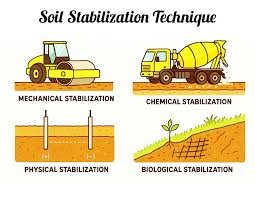
Mechanical stabilization is one of the most common and cost-effective approaches to improving soil strength. It focuses on physically altering soil structure to increase density and reduce air voids.
Compaction Tactics and Techniques
Soil compaction involves applying mechanical force to compress soil particles closer together. This increases soil density, improves load-bearing capacity, and reduces settlement.
Vibratory rollers are commonly used for granular soils, while smooth drum rollers and pneumatic compactors are effective for cohesive soils.
Hand tampers and plate compactors are often used in confined spaces or residential projects.
Proper moisture control is critical during compaction. Soil that is too dry or too wet will not compact effectively. The Proctor test is commonly used to determine optimal moisture content for maximum density.
Chemical Soil Stabilization Methods
Chemical stabilization improves soil properties by adding binders that react with soil particles to increase strength and durability.
Lime Stabilization
Lime is widely used to treat clay soils. It reduces plasticity, improves workability, and increases long-term strength by forming cementitious compounds.
Cement Stabilization
Cement stabilization increases compressive strength and stiffness. It is commonly used for road subgrades, industrial sites, and areas requiring high load resistance.
Fly Ash and Chemical Additives
Fly ash and other industrial byproducts can improve soil performance while supporting sustainable construction practices. These additives enhance bonding and reduce moisture sensitivity.
Chemical stabilization is especially effective for projects requiring long-term durability under heavy loads.
Erosion Control Techniques for Soil Stabilization
Erosion is a major threat to soil stability, particularly on slopes and exposed construction sites. Erosion control methods prevent soil loss caused by wind and water.
Vegetation plays a key role in erosion control. Grass, shrubs, and ground cover stabilize soil through root reinforcement and surface protection.
Mulch and erosion control blankets protect exposed soil from rainfall impact and surface runoff.
Geotextiles are commonly used to separate soil layers, reinforce slopes, and control erosion while allowing water drainage.
Effective erosion control preserves soil structure and reduces environmental impact.
Drainage-Based Soil Stabilization Methods
Water is one of the most influential factors affecting soil stability. Poor drainage can weaken soil, increase pore pressure, and cause erosion or settlement.
Drainage-based stabilization focuses on controlling surface water and groundwater movement.
French drains and subsurface drainage systems redirect water away from foundations and slopes.
Proper grading ensures surface runoff flows away from structures rather than pooling.
Lowering the groundwater table through drainage improves soil strength and reduces moisture-related movement.
Managing water effectively enhances the performance of other stabilization methods.
Biological Soil Stabilization Approaches
Biological stabilization uses natural processes to improve soil stability. This approach is environmentally friendly and effective in many applications.
Vegetative stabilization relies on plant roots to bind soil particles together. Root systems increase shear strength and reduce erosion.
Bioengineering techniques combine vegetation with structural elements, such as live staking or vegetated geogrids.
These methods are commonly used for slope stabilization, embankments, and environmentally sensitive areas.
Geosynthetics in Soil Stabilization
Geosynthetics are engineered materials designed to improve soil performance and stability.
Geotextiles provide separation, filtration, and drainage while reinforcing soil layers.
Geogrids improve load distribution and reduce soil movement in roads, foundations, and retaining structures.
Geomembranes control moisture and prevent soil contamination.
Geosynthetics are widely used due to their durability, efficiency, and versatility in construction projects.
Soil Stabilization for Different Construction Applications
Different projects require different stabilization strategies.
Residential foundations benefit from compaction, drainage control, and sometimes chemical treatment to prevent settlement.
Roadways and pavements rely on stabilized subgrades to support traffic loads and prevent cracking.
Slopes and embankments require erosion control, geosynthetics, and vegetation to maintain long-term stability.
Matching stabilization methods to the application ensures structural performance and longevity.
Choosing the Right Soil Stabilization Method
Selecting the best soil stabilization method depends on several factors.
Soil type and moisture conditions influence method effectiveness.
Project scope and load requirements determine strength needs.
Environmental impact and sustainability goals may favor biological or low-impact solutions.
Budget and construction timeline also play important roles.
A thorough soil assessment and professional planning ensure the chosen method delivers long-term results.
Environmental and Regulatory Considerations
Soil stabilization must comply with environmental regulations and construction standards.
Some chemical treatments require approval due to environmental concerns.
Erosion control is often mandated to protect waterways and neighboring properties.
Sustainable stabilization practices reduce environmental impact and improve project acceptance.
Working with local authorities and environmental agencies ensures compliance and project success.
Maintenance and Long-Term Performance
Stabilized soil requires monitoring to ensure continued performance.
Drainage systems should be inspected regularly to prevent water buildup.
Vegetation must be maintained to ensure effective erosion control.
Periodic inspections help identify settlement or erosion early, allowing timely corrective action.
Proper maintenance extends the lifespan of stabilized soil systems.
Conclusion
Understanding soil stabilization methods such as compaction tactics and erosion control is essential for safe, durable, and cost-effective construction. From mechanical compaction and chemical treatments to erosion control and drainage solutions, each method plays a vital role in improving soil performance.
Choosing the right stabilization approach protects structures, reduces maintenance costs, and ensures long-term project success. With proper planning, testing, and execution, stabilized soil provides a strong foundation for any construction or infrastructure project.