

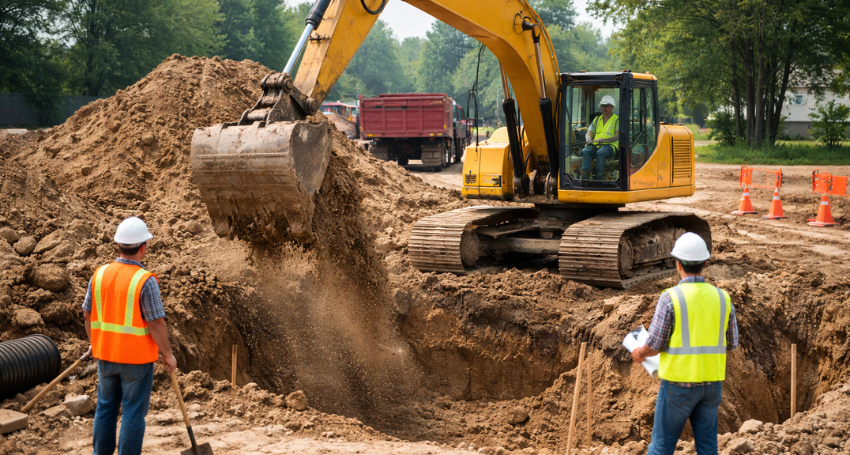
If you’ve ever watched a construction project begin, you’ve probably seen heavy equipment clearing land, digging trenches, or leveling soil. This early phase is known as excavation and it lays the groundwork for everything that follows. Understanding what excavation is and how does it works helps property owners, developers, and homeowners appreciate why this step is essential for safe and long-lasting construction.
In simple terms, excavation is the process of removing soil, rock, or debris to prepare a site for building foundations, utilities, landscaping, or drainage systems. It transforms raw land into a stable base that supports structures for years to come. In this blog we will explore the importance of proper excavation, even the best-designed building can experience drainage problems, shifting foundations, or structural damage.
Why Excavation Matters Before Construction
Every successful project starts below ground level. Excavation ensures that soil conditions, elevation, and drainage support the structure being built. Contractors carefully assess the site to determine soil type, slope, and environmental factors before digging begins.
For companies like BHC Construct, which specializes in residential and commercial construction services, preparing a site correctly is essential for durability and safety. Their work emphasizes quality craftsmanship, precise planning, and long-term structural stability values that begin with proper site preparation and groundwork.
When excavation is done correctly, it helps:
- Improve drainage and prevent water pooling
- Create a stable base for foundations
- Reduce erosion risks
- Make room for underground utilities
- Increase project safety and efficiency
As a result, excavation is not just digging, it’s a strategic construction phase driven by engineering and experience.
The Excavation Process: Step by Step
Understanding what is excavation & how does it work becomes easier when you break the process into clear stages.
1. Site Evaluation and Planning
Before equipment arrives, professionals inspect the site. They review land elevation, soil composition, and local building requirements. This planning phase determines how deep and wide excavation should go.
2. Marking and Clearing
Workers mark boundaries and remove vegetation, debris, or old structures. Clearing ensures safe equipment movement and accurate excavation.
3. Digging and Soil Removal
Excavators, bulldozers, and backhoes remove soil based on project plans. Contractors often separate usable soil from waste materials to improve efficiency and reduce costs.
4. Grading and Leveling
After digging, crews grade the land to create proper slopes for drainage. Correct grading prevents water from collecting near foundations, which protects the structure long term.
5. Compaction and Inspection
Soil is compacted to reduce future shifting. Engineers may test the ground to confirm stability before foundation work begins.
Types of Excavation Used in Construction
Different projects require different excavation methods. Here are the most common types:
Topsoil Excavation
This removes the upper layer of soil to reach stable ground beneath. It’s common in landscaping and new construction.
Trench Excavation
Used for installing utilities like water lines, electrical systems, or drainage pipes.
Cut and Fill Excavation
Soil is removed from high areas and redistributed to low areas, creating a level surface.
Basement or Foundation Excavation
This method prepares space for foundations, crawl spaces, or basements.
Each type supports specific project goals, and professionals choose methods based on site conditions and design plans.
Equipment Used in Excavation
Modern excavation relies on specialized machinery to improve precision and safety. Common equipment includes:
- Hydraulic excavators for heavy digging
- Bulldozers for pushing soil and debris
- Backhoes for smaller, detailed excavation
- Dump trucks for hauling material
- Compactors for stabilizing ground
Skilled operators ensure the machinery works efficiently while protecting surrounding structures and utilities.
Common Challenges During Excavation
Even with careful planning, excavation can present obstacles. Rocky soil, hidden utility lines, or unexpected groundwater often require quick problem-solving.
Professional contractors reduce risk by:
- Performing utility location checks
- Using proper safety barriers
- Monitoring weather and drainage conditions
- Adapting equipment to soil conditions
This proactive approach helps prevent delays and protects both workers and property.
How Professional Excavation Supports Long-Term Results
Many property owners focus on visible construction elements, but what lies beneath matters just as much. Poor excavation can lead to foundation cracks, drainage problems, and expensive repairs later.
Choosing experienced professionals ensures that soil preparation and grading are handled with precision. At BHC Construct, attention to detail and commitment to quality construction standards contribute to stronger, longer-lasting projects.
Choosing the Right Excavation Partner
If you’re planning a construction project, hiring the right team makes a big difference. Look for contractors who understand soil conditions, safety regulations, and drainage planning. Experience across multiple project types can also help ensure smoother execution.
Clear communication, modern equipment, and transparent planning are strong indicators of a reliable excavation contractor.
Build with Confidence from the Ground Up
When you understand what is excavation & how does it work, you can see why the success of any construction project begins underground. Whether you’re planning a new home, commercial build, or major outdoor improvement, professional excavation creates the stable foundation your investment deserves. If you want a team that combines expertise, precision, and a commitment to quality,
Conclusion
Understanding what is excavation & how does it work gives you a clearer picture of why every successful construction project begins below the surface. Excavation is far more than simply moving soil it involves careful planning, precise execution, and skilled professionals who ensure the land is safe, stable, and ready for long-term use. From site evaluation and grading to utility preparation and soil compaction, each step plays a critical role in creating a strong foundation for future construction. By partnering with experienced contractors like BHC Construct, property owners can move forward with confidence, knowing their project starts with solid groundwork designed for durability, safety, and lasting results. Contact us experienced professionals like BHC Construct can help you start your project with confidence from the ground up.